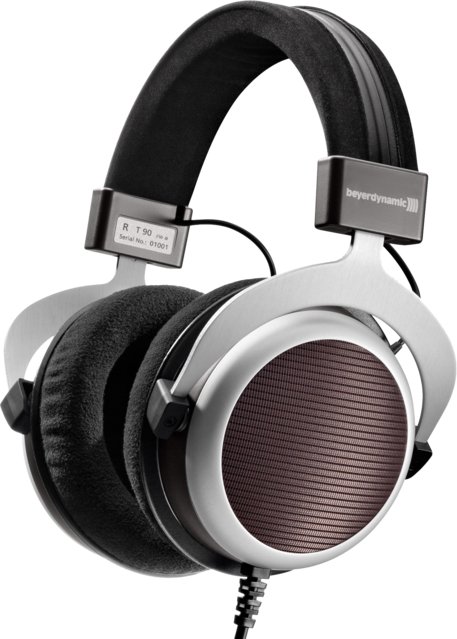
Beyerdynamic T90 features Unknown. Help us by suggesting a value. battery.
Design
| Fit i | Over-ear (482 others) |
| Weight i | 350 g (5 others) |
| Travel bag is included i | ✔ (353 others) |
Sound quality
| Has active noise cancellation (anc) i | ✔ (332 others) |
| Lowest frequency i | 5 Hz (58 others) |
| Highest frequency i | 40000 Hz (106 others) |
| Impedance i | 250 Ohms (9 others) |
| Sound pressure level i | 102 dB/mW (24 others) |
| Has passive noise reduction i | ✖ |
Power
Connectivity
| Connectivity i | Wired (175 others) |
Miscellaneous
| Has a 3.5mm male connector i | ✔ |
Similar products




Frequently Asked Questions
What is the impedance of the Beyerdynamic T90?
At 250 Ohms, the Beyerdynamic T90 is 354% above the category average for impedance, ranking #22 out of 453 — see ranking headphone products.
What is the lowest frequency of the Beyerdynamic T90?
At 5 Hz, the Beyerdynamic T90 is 67% below the category average for lowest frequency, ranking #475 out of 559 — see ranking headphone products.
How heavy is the Beyerdynamic T90?
At 350 g, the Beyerdynamic T90 is 42% above the category average for weight, ranking #496 out of 545 — see ranking headphone products.
What is the highest frequency of the Beyerdynamic T90?
At 40000 Hz, the Beyerdynamic T90 is 40% above the category average for highest frequency, ranking #48 out of 561 — see ranking headphone products.
How does it compare?
How does the Beyerdynamic T90's lowest frequency compare to similar headphoness?
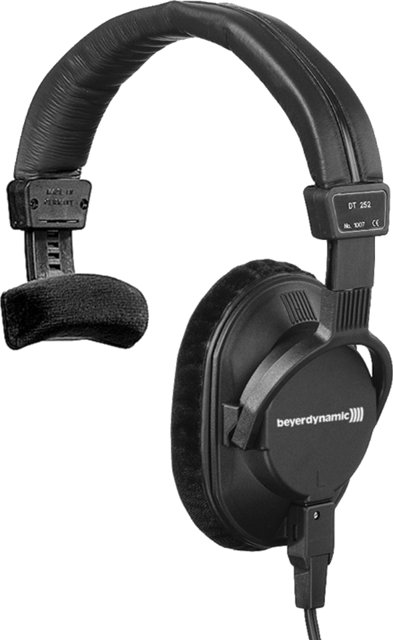
At 5 Hz, the Beyerdynamic T90 trails the Beyerdynamic DT 250 (10 Hz) by 50%.
How does the Beyerdynamic T90's highest frequency compare to similar headphoness?
At 40000 Hz, the Beyerdynamic T90 leads the Koss PRO4AAT (25000 Hz) by 38%.
How does the Beyerdynamic T90's weight compare to similar headphoness?
At 350 g, the Beyerdynamic T90 trails the Beyerdynamic DT 250 (240 g) by 31%.
How does the Beyerdynamic T90's sound pressure level compare to similar headphoness?
At 102 dB/mW, the Beyerdynamic T90 leads the Koss PRO4AAT (95 dB/mW) by 7%.